Blog

  • Two-fluid coexistence and phase separation in a one-dimensional model with pair hopping and density interactions

    Abstract: We compute the phase diagram of a one-dimensional model of spinless fermions with pair-hopping and nearest-neighbor interaction, first introduced by Ruhman and Altman, using the density-matrix renormalization group combined with various analytical approaches. Although the main phases are a Luttinger liquid of fermions and a Luttinger liquid of pairs, we also find remarkable phases in which only a fraction of the fermions are paired. In such case, two situations arise: either fermions and pairs coexist spatially in a two-fluid mixture, or they are spatially segregated leading to phase separation. These results are supported by several analytical models that describe in an accurate way various relevant cuts of the phase diagram. Last, we identify relevant microscopic observables that capture the presence of these two fluids: while originally introduced in a phenomenological way, they support a wider application of two-fluid models for describing pairing phenomena.

    Lorenzo Gotta 1 Leonardo Mazza 1 Pascal Simon 2 Guillaume Roux 1
    1 LPTMS – Laboratoire de Physique Théorique et Modèles Statistiques
    2 LPS – Laboratoire de Physique des Solides

  • Journée FFJ 2021

    Journée FFJ 2021

    Journée de la Fédération Friedel-Jacquinot

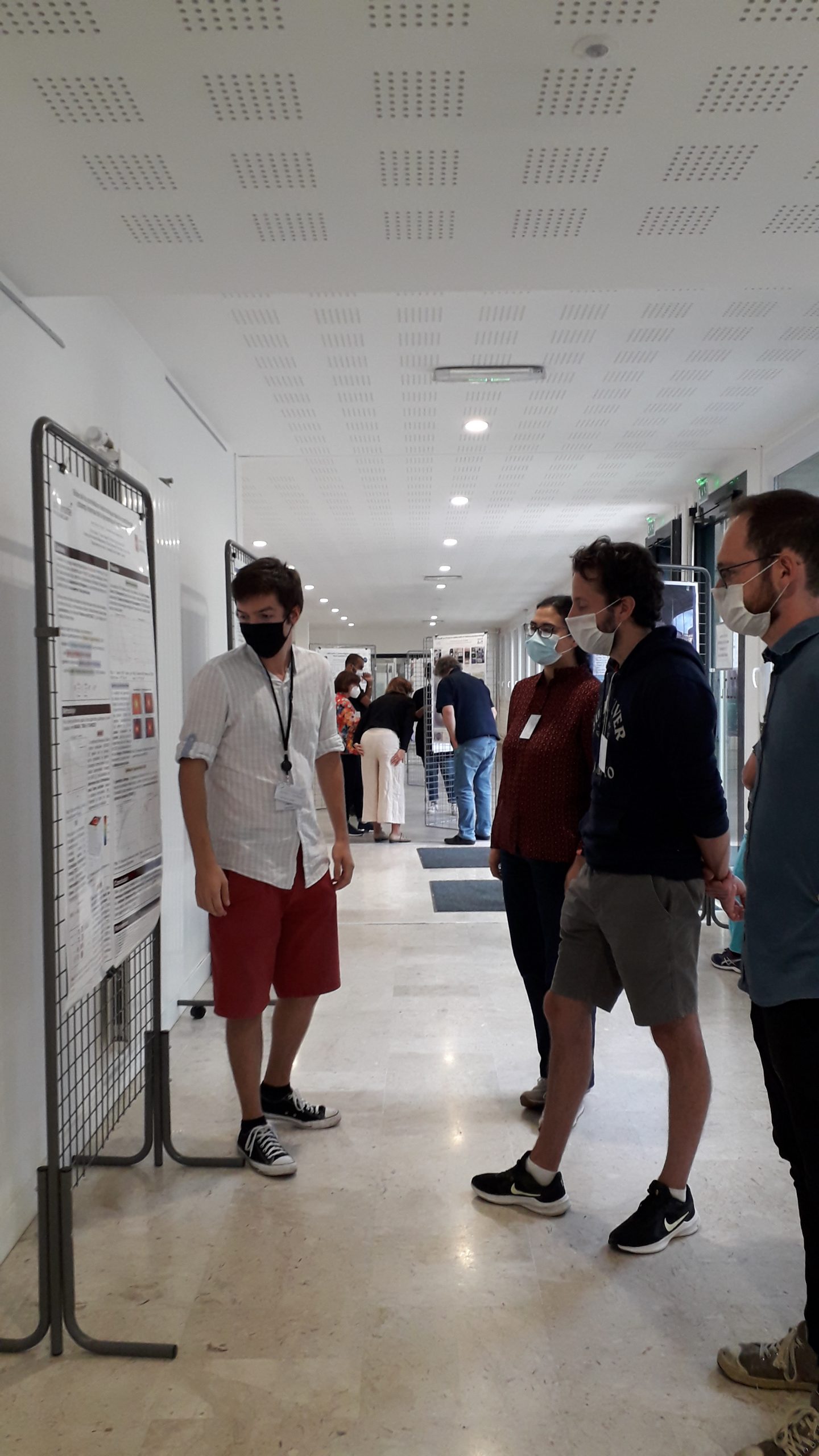
    Le jeudi 16 septembre. Vous trouverez ci-joint l’affiche ainsi que le programme de cette journée qui se veut avant tout un moment de rencontres et d’échanges.

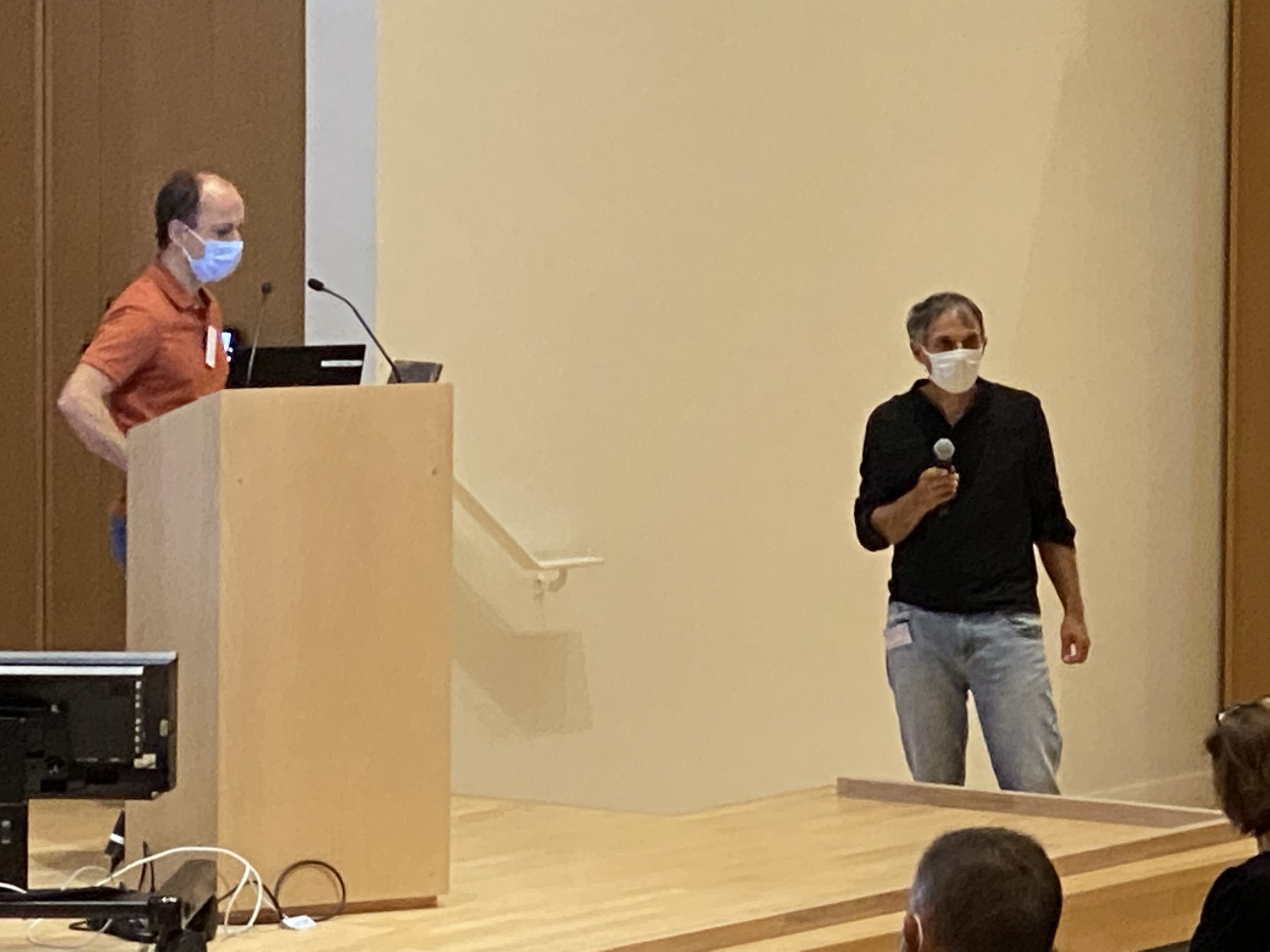
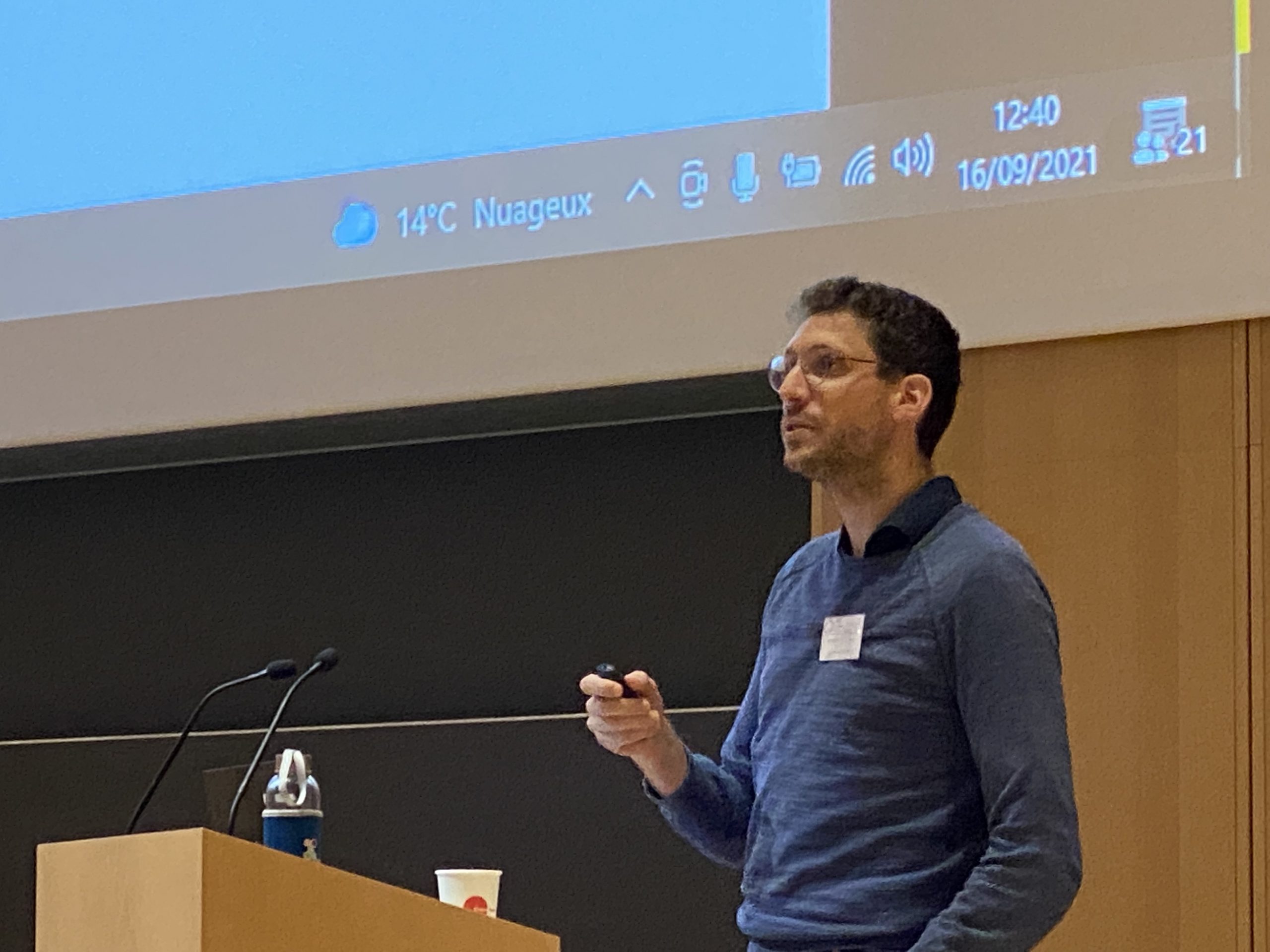
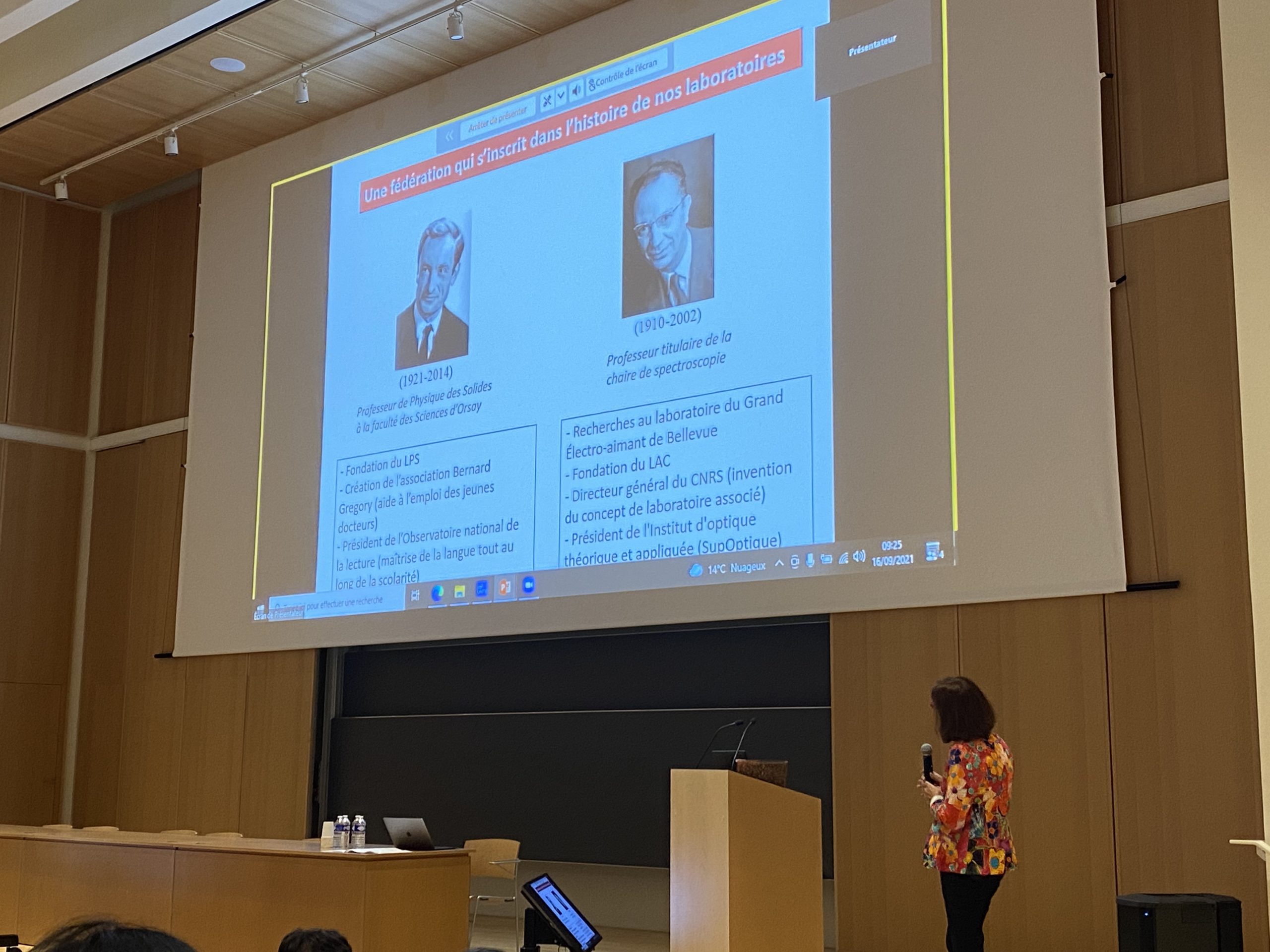
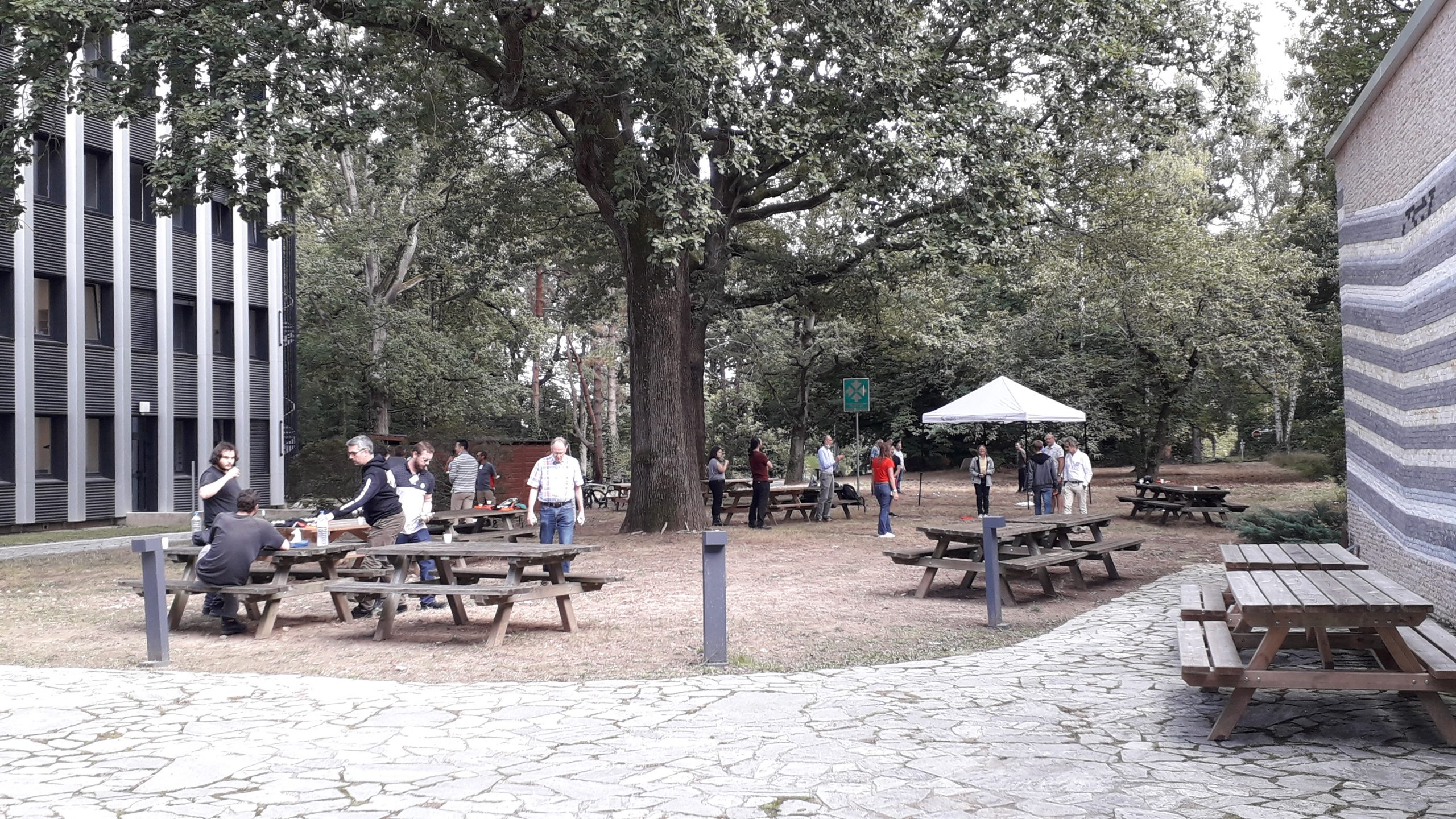
    Les présentations des six laboratoires de la fédération auront lieu durant la matinée dans l’amphi de l’ENS, un buffet sera ensuite servi sous le chêne du LPS et l’après-midi sera consacré à une session posters techniques et scientifiques ainsi qu’à des activités sportives en extérieur.

  • Phase slips, dislocations, half-integer vortices, two-fluid hydrodynamics and the chiral anomaly in charge and spin density waves

    Abstract : This brief review recalls some chapters in theory of sliding incommensurate density waves which may have appeared after inspirations from studies of Dzyaloshinskii and collaborations with him. First we address the spin density waves which rich order parameter allows for an unusual object of a complex topological nature: a half-integer dislocation combined with a semi-vortex of the staggered magnetization. It becomes energetically preferable with respect to an ordinary dislocation due to the high Coulomb energy at low concentration of carriers. Generation of these objects should form a sequence of π-phase slips in accordance with experimental doubling of the phase-slips rate. Next, we revise the commonly employed TDGL approach which is shown to suffer from a violation of the charge conservation law resulting in nonphysical generation of particles which is particularly pronounced for electronic vortices in the course of their nucleation or motion. The suggested consistent theory exploits the chiral transformations taking into account the principle contribution of the fermionic chiral anomaly to the effective action. The derived equations clarify partitions of charges, currents, and rigidity among subsystems of condensed and normal carriers and the gluing electric field. Being non-analytical with respect to the order parameter, contrarily the conventional TDGL type, the resulting equations still allow for a numerical modeling of transient processes related to space- and spatiotemporal vorticity in DWs.

    Serguei Brazovskii 1 Natasha Kirova 2
    1 LPTMS – Laboratoire de Physique Théorique et Modèles Statistiques
    2 LPS – Laboratoire de Physique des Solides
  • Bonjour tout le monde !

    Bonjour tout le monde !

    Bienvenue sur WordPress. Ceci est votre premier article. Modifiez-le ou supprimez-le, puis commencez à écrire !

  • Ion and electron ghost imaging

    A. Trimeche 1 Colin Lopez 2 D. Comparat 1 Y. Picard
    1 LAC – Laboratoire Aimé Cotton
    2 LuMIn – Laboratoire Lumière, Matière et Interfaces

  • Tailoring Dispersion of Room-Temperature Exciton-Polaritons with Perovskite-Based Subwavelength Metasurfaces

    Nguyen Ha My Dang 1 Dario Gerace Emmanuel Drouard Gaëlle Trippé-Allard 2, 3 Ferdinand Lédée 2, 3 Radoslaw Mazurczyk Emmanuelle Deleporte 4, 2, 3 Christian Seassal 5 Hai Son Nguyen
    1 INL – Institut des Nanotechnologies de Lyon
    2 LuMIn – Laboratoire Lumière, Matière et Interfaces
    3 NOOS – Nano Optique et Spectroscopy
    LuMIn – Laboratoire Lumière, Matière et Interfaces
    4 LAC – Laboratoire Aimé Cotton
    5 INL – Photonique – INL – Nanophotonique
    INL – Institut des Nanotechnologies de Lyon

  • Quantum interference effects of out-of-plane confinement on two-dimensional electron systems in oxides

    Abstract : It was recently discovered that a conductive, metallic state is formed on the surface of some insulating oxides. First observed on SrTiO 3 (001), it was then found in other compounds as diverse as anatase TiO 2 , KTaO 3 , BaTiO 3 , ZnO, and also on different surfaces of SrTiO 3 (or other oxides) with different symmetries. The spatial extension of the wave function of this electronic state is of only a few atomic layers. Experiments indicate its existence is related to the presence of oxygen vacancies induced at or near the surface of the oxide. We present a simplified model aimed at describing the effect of its small spatial extension on measurements of its three-dimensional (3D) electronic structure by angular resolved photoemission spectroscopy. For the sake of clarity, we base our discussion on a simple tight-binding scheme plus a confining potential that is assumed to be induced by the oxygen vacancies. Our model parameters are, nevertheless, obtained from density functional calculations. With this methodology, we can explain, from a very simple concept of selective interference, the “wobbling,” i.e., the photoemission intensity modulation and/or apparent dispersion of the Fermi surface and spectra along the out-of-plane ( k z ) direction, and the “mixed 2D/3D” characteristics observed in some experiments. We conclude that the critical model parameters for such an effect are the relative strength of the electronic hopping of each band and the height/width aspect ratio of the surface confining potential. By considering recent photoemission measurements, in light of our findings, we can get relevant information on the electronic wave functions and the nature of the confining potential.

    A.F. Santander-Syro 1 J. Dai 1 T.C. Rödel 1, 2 E. Frantzeskakis 1 F. Fortuna 1 R. Weht M.J. Rozenberg 3
    1 ISMO – Institut des Sciences Moléculaires d’Orsay
    2 SSOLEIL – Synchrotron SOLEIL
    3 LPS – Laboratoire de Physique des Solides
  • Probing the radiative electromagnetic local density of states in nanostructures with a scanning tunneling microscope

    Abstract : A novel technique for the investigation of the radiative contribution to the electromagnetic local density of states is presented. The inelastic tunneling current from a scanning tunneling microscope (STM) is used to locally and electrically excite the plasmonic modes of a triangular gold platelet. The radiative decay of these modes is detected through the transparent substrate in the far field. Emission spectra, which depend on the position of the STM excitation, as well as energy-filtered emission maps for particular spectral windows are acquired using this technique. The STM-nanosource spectroscopy and microscopy results are compared to those obtained from spatially resolved electron energy loss spectroscopy (EELS) maps on similar platelets. While EELS is known to be related to the total projected electromagnetic local density of states, the light emission from the STM-nanosource is shown here to select the radiative contribution. Full electromagnetic calculations are carried out to explain the experimental STM data, and provide valuable insight into the radiative nature of the different contributions of the breathing and edge plasmon modes of the nanoparticles. Our results introduce the STM-nanosource as a tool to investigate and engineer light emission at the nanoscale.

    Shuiyan Cao 1, 2 Mario Zapata-Herrera 3 Alfredo Campos 4 Eric Le Moal 1 Sylvie Marguet 5 Gérald Dujardin 1 Mathieu Kociak 4 Javier Aizpurua 6 Andrey Borissov 7 Elizabeth Boer-Duchemin 1, *
    * Auteur correspondant
    1 Nanophysique et Surfaces
    ISMO – Institut des Sciences Moléculaires d’Orsay
    2 NUAA – Nanjing University of Aeronautics and Astronautics
    3 Center of Materials Physics CSIC-UPV / EHU and Donostia International Physics Center
    4 LPS – Laboratoire de Physique des Solides
    5 LEDNA – Laboratoire Edifices Nanométriques
    NIMBE UMR 3685 – Nanosciences et Innovation pour les Matériaux, la Biomédecine et l’Energie (ex SIS2M)
    6 DIPC – Donostia International Physics Center
    7 Nanophysique et Surfaces
    ISMO – Institut des Sciences Moléculaires d’Orsay

  • Hybrid perovskites for photovoltaics and optoelectronics

    Antonio Tejeda 1 Wallace C H Choy 2 Emmanuelle Deleporte 3, 4 Michael Grätzel 5
    1 LPS – Laboratoire de Physique des Solides
    2 HKU – The University of Hong Kong
    3 LuMIn – Laboratoire Lumière, Matière et Interfaces
    4 NOOS – Nano Optique et Spectroscopy
    LuMIn – Laboratoire Lumière, Matière et Interfaces
    5 EPFL – Ecole Polytechnique Fédérale de Lausanne

  • Spin fine-structure reveals bi-exciton geometry in an organic semiconductor

    Abstract : In organic semiconductors, bi-exciton states are key intermediates in carrier-multiplication and exciton annihilation. Of particular recent interest is the spin-2 (quintet) bi-exciton. Comprised of two triplet excitons, the bi-exciton can be formed by singlet fission (the formation of two triplet excitons from one singlet state) or by triplet-triplet annihilation (the reverse process). Of interest for photovoltaics and photocatalysis, the wavefunction of these optically dark bi-excitons is difficult to probe and predict. However, the local geometry of the pair-state is imprinted in the fine structure of its spin Hamiltonian. To access the fine structure of the quintet-state we develop and deploy broadband optically detected magnetic resonance (0-9 GHz). Here we correlate the experimentally extracted spin structure with the molecular crystal structure to identify the specific molecular pairings on which the bi-exciton state resides.

    K. M. M Yunusova 1 S. L. L Bayliss 1 T. Chanelière 2, 3 V. Derkach 4 J. E. E Anthony 5 Alexei Chepelianskii 1 L. R. R Weiss 6
    1 LPS – Laboratoire de Physique des Solides
    2 NPSC – Nanophysique et Semiconducteurs
    NEEL – Institut Néel
    3 LAC – Laboratoire Aimé Cotton
    4 Usikov’s Institute for Radiophysics and Electronics
    5 University of Kentucky
    6 Cavendish Laboratory