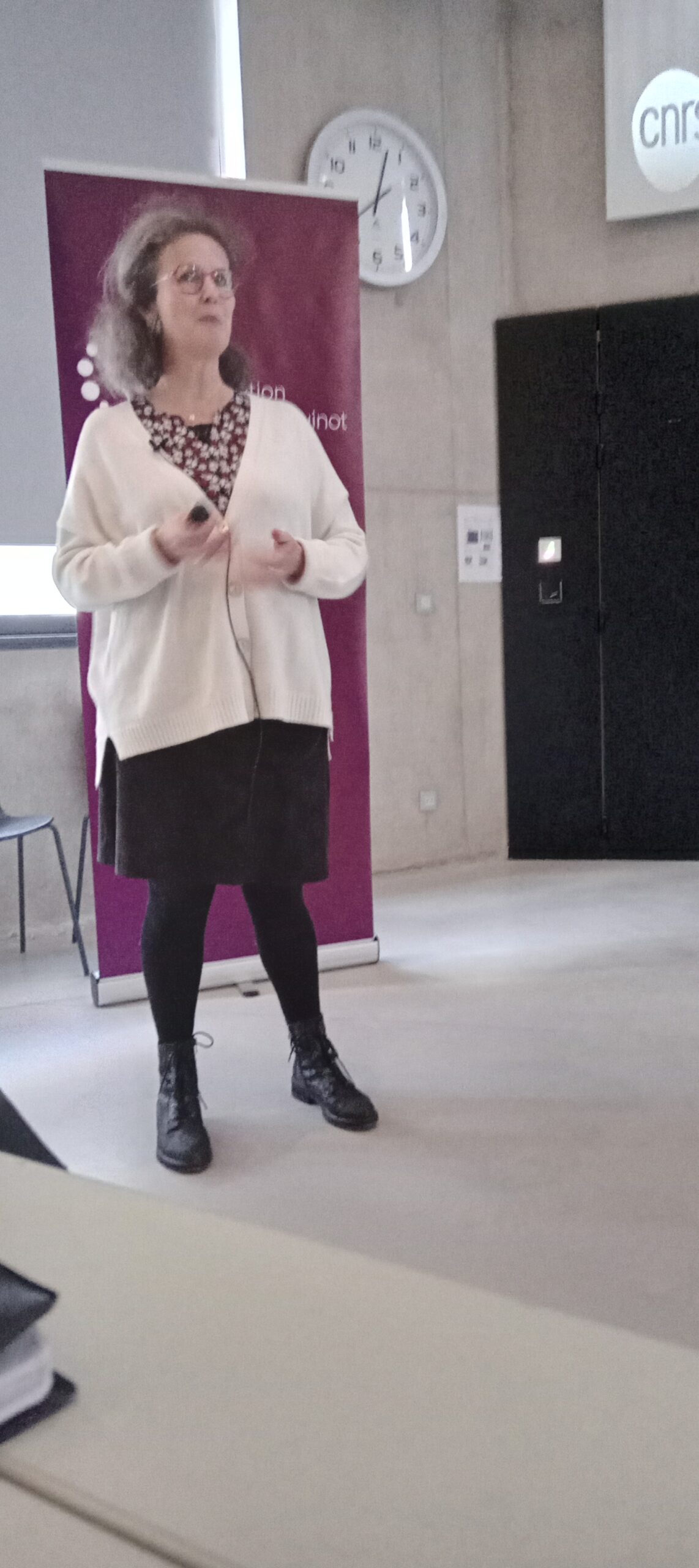
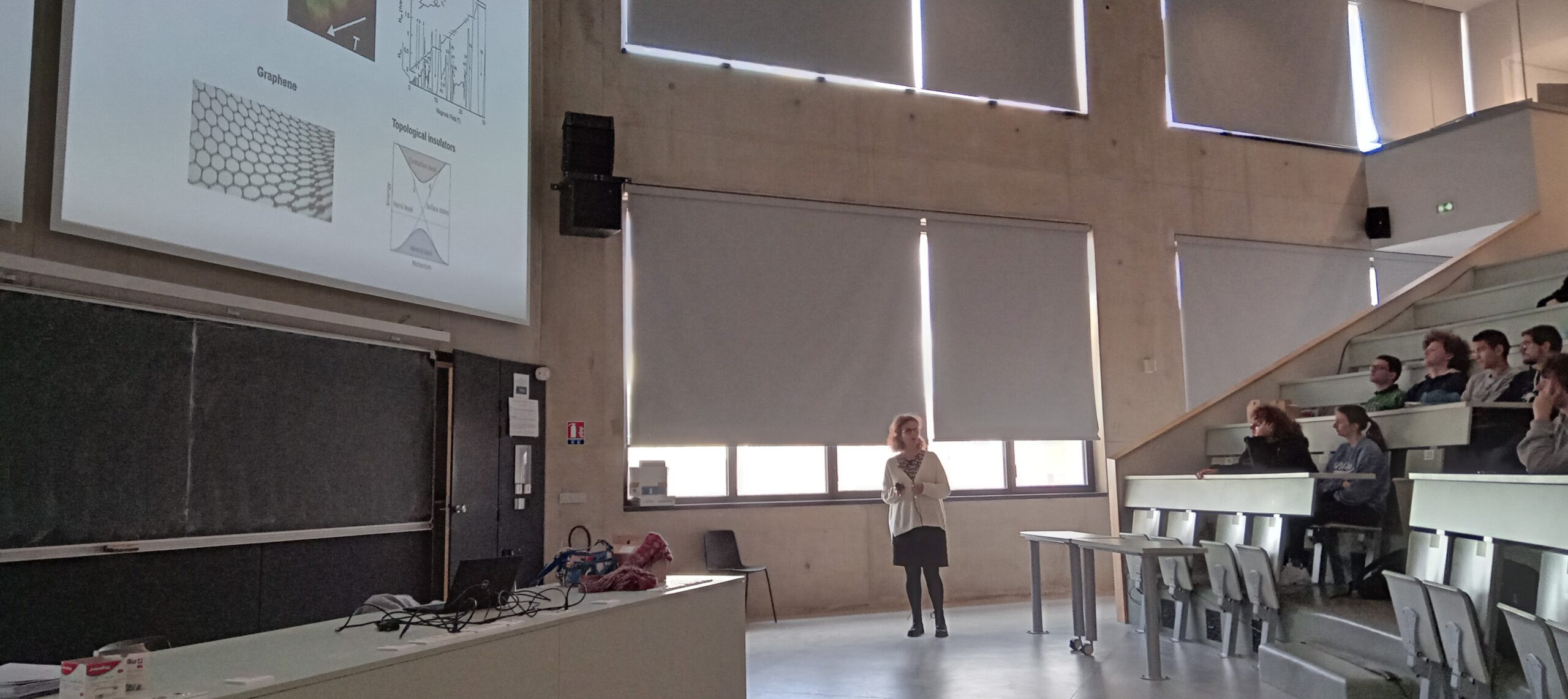
Turbulence and Climate
Turbulence and Climate
Mme Bérengère Dubrulle
Ce séminaire s’adresse à la fois aux étudiants et aux chercheurs.
Le moment de convivialité est un moment privilégié pour engager des discussions entre étudiants et chercheurs.
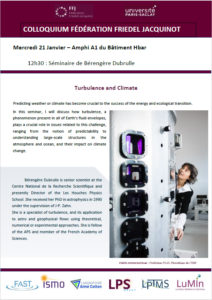
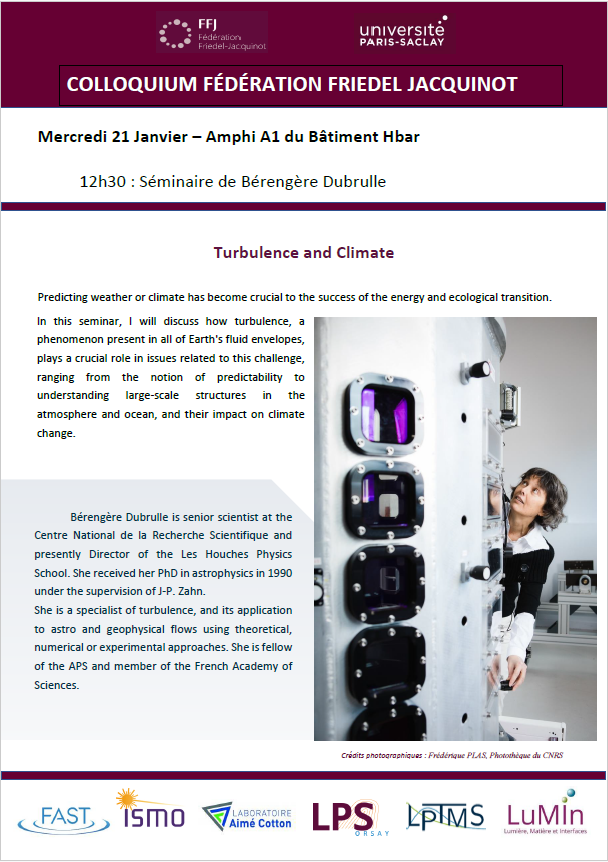
Mme Bérengère Dubrulle
Ce séminaire s’adresse à la fois aux étudiants et aux chercheurs.
Le moment de convivialité est un moment privilégié pour engager des discussions entre étudiants et chercheurs.
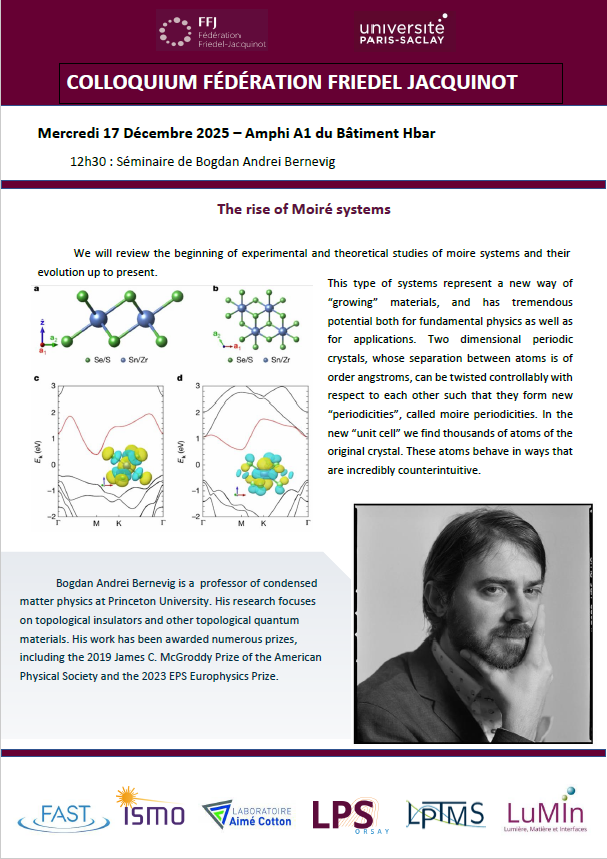
M. Bogdan Andrei Bernevig
Ce séminaire s’adresse à la fois aux étudiants et aux chercheurs.
Le moment de convivialité est un moment privilégié pour engager des discussions entre étudiants et chercheurs.
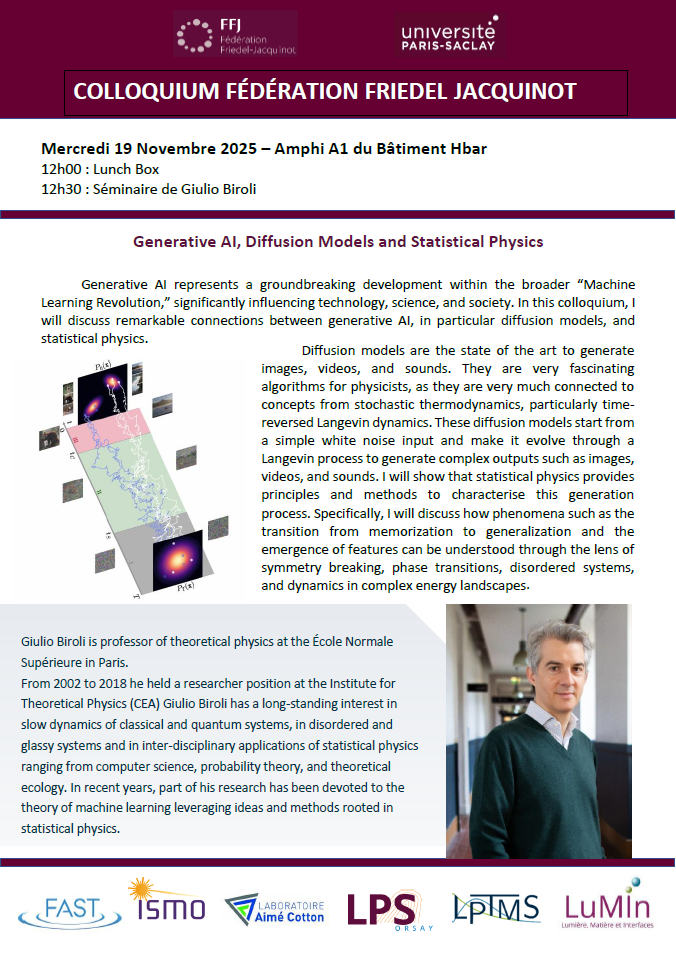
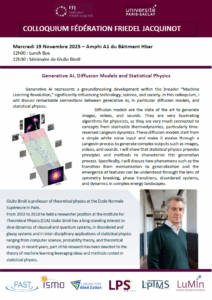
Generative AI, Diffusion Models and Statistical Physics
M. Giulio Biroli
Ce séminaire s’adresse à la fois aux étudiants et aux chercheurs.
Le moment de convivialité est un moment privilégié pour engager des discussions entre étudiants et chercheurs.
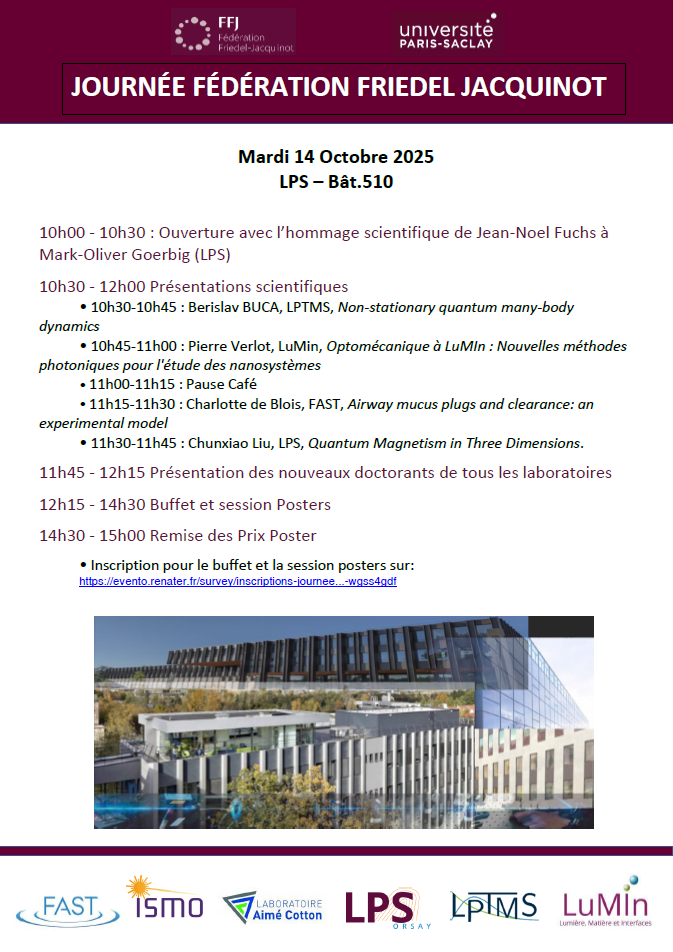
Cette année encore la FFJ organise sa 5ème Journée qui aura lieu la mardi 14 octobre 2025 à partir de 10h00 au LPS – bâtiment 510 –
Nous vous attendons donc à venir nombreux(ses) en vous inscrivant au préalable sur https://evento.renater.fr/survey/inscriptions-journee…-wgss4gdf pour votre présence au buffet et/ou à la session posters.
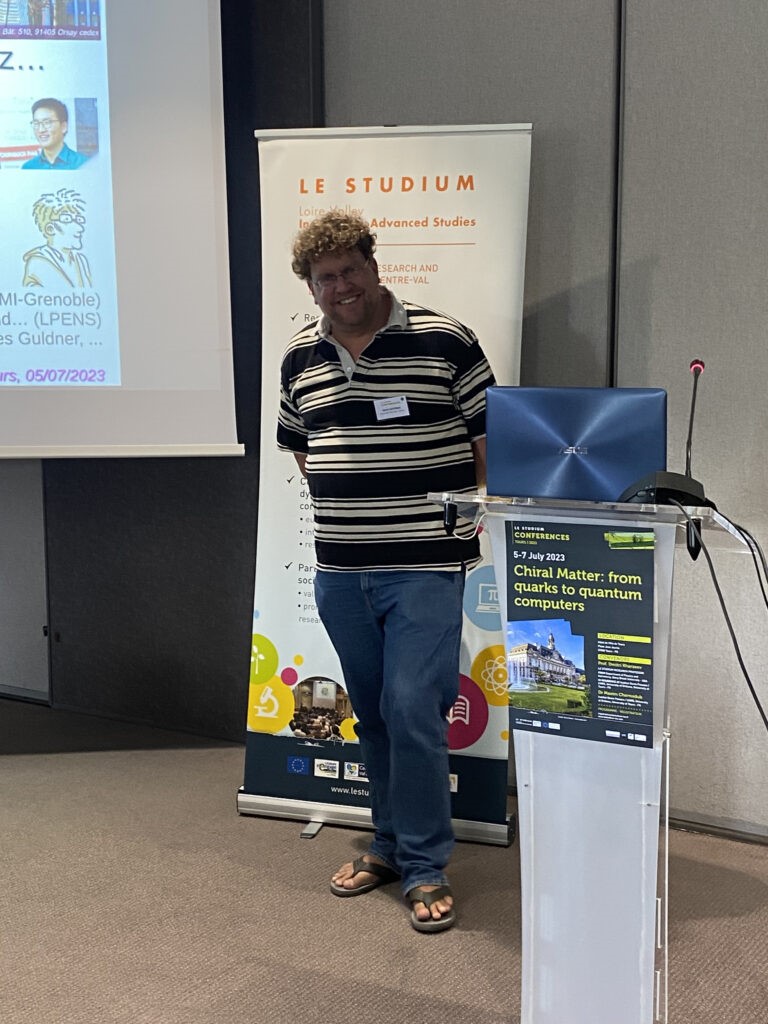
Le Laboratoire de Physique des Solides est en deuil. Il vient de perdre un de ses membres majeurs. Mark-Oliver Goerbig, chercheur du groupe Théorie, nous a quittés brutalement mardi 2 septembre, à l’âge de 50 ans. C’est un immense choc pour notre communauté, ce décès signe la perte d’un des meilleurs scientifiques de sa génération et d’une personnalité humaine chaleureuse et charismatique.
Un hommage lui sera rendu lors de la prochaine Journée de la FFJ le 14 octobre. Nous vous invitons à consulter la page du LPS via le lien ci-dessous.
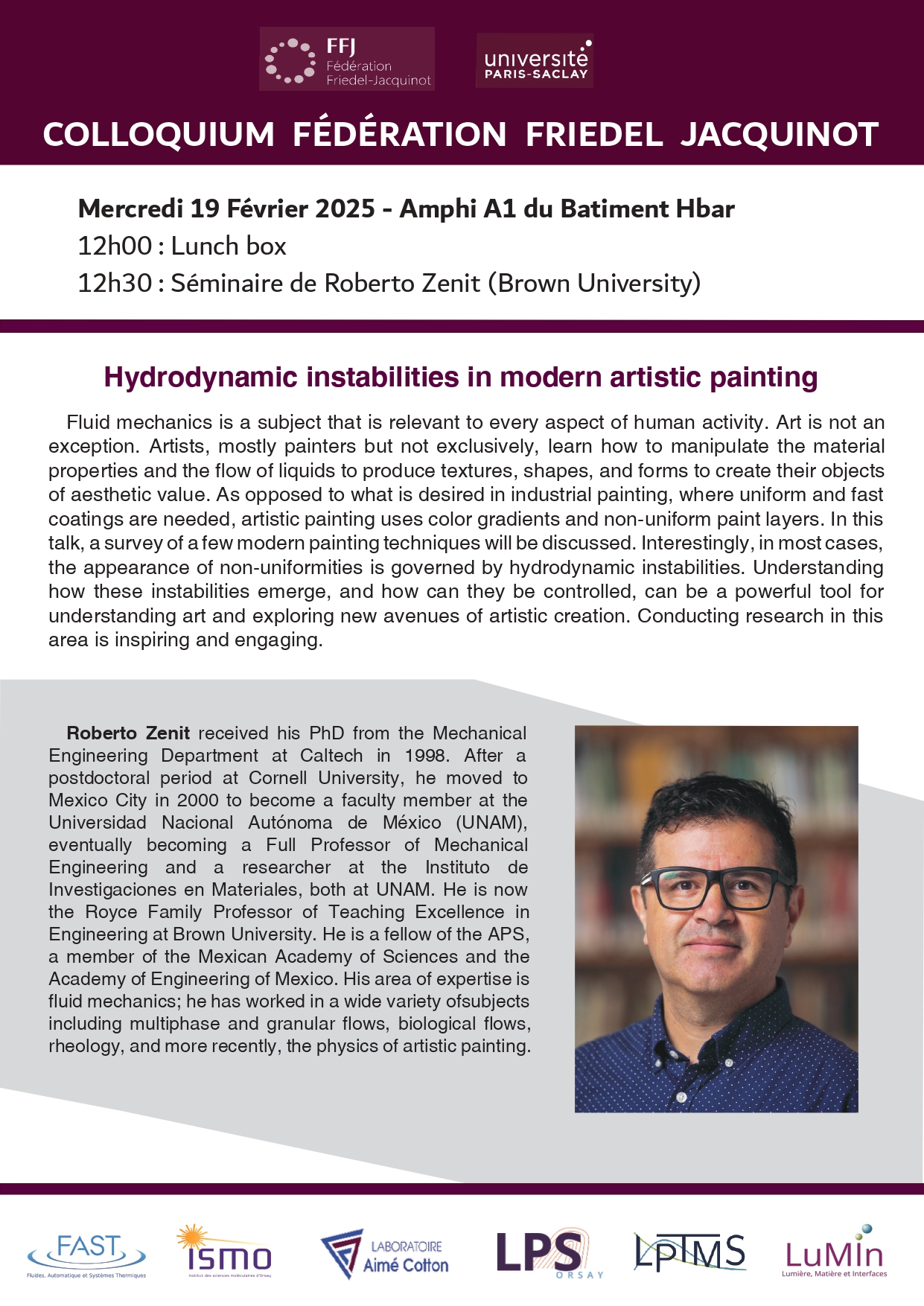
Hydrodynamic instabilities in modern artistic painting
M. Roberto Zenit
Ce séminaire s’adresse à la fois aux étudiants et aux chercheurs.
Le moment de convivialité est un moment privilégié pour engager des discussions entre étudiants et chercheurs.
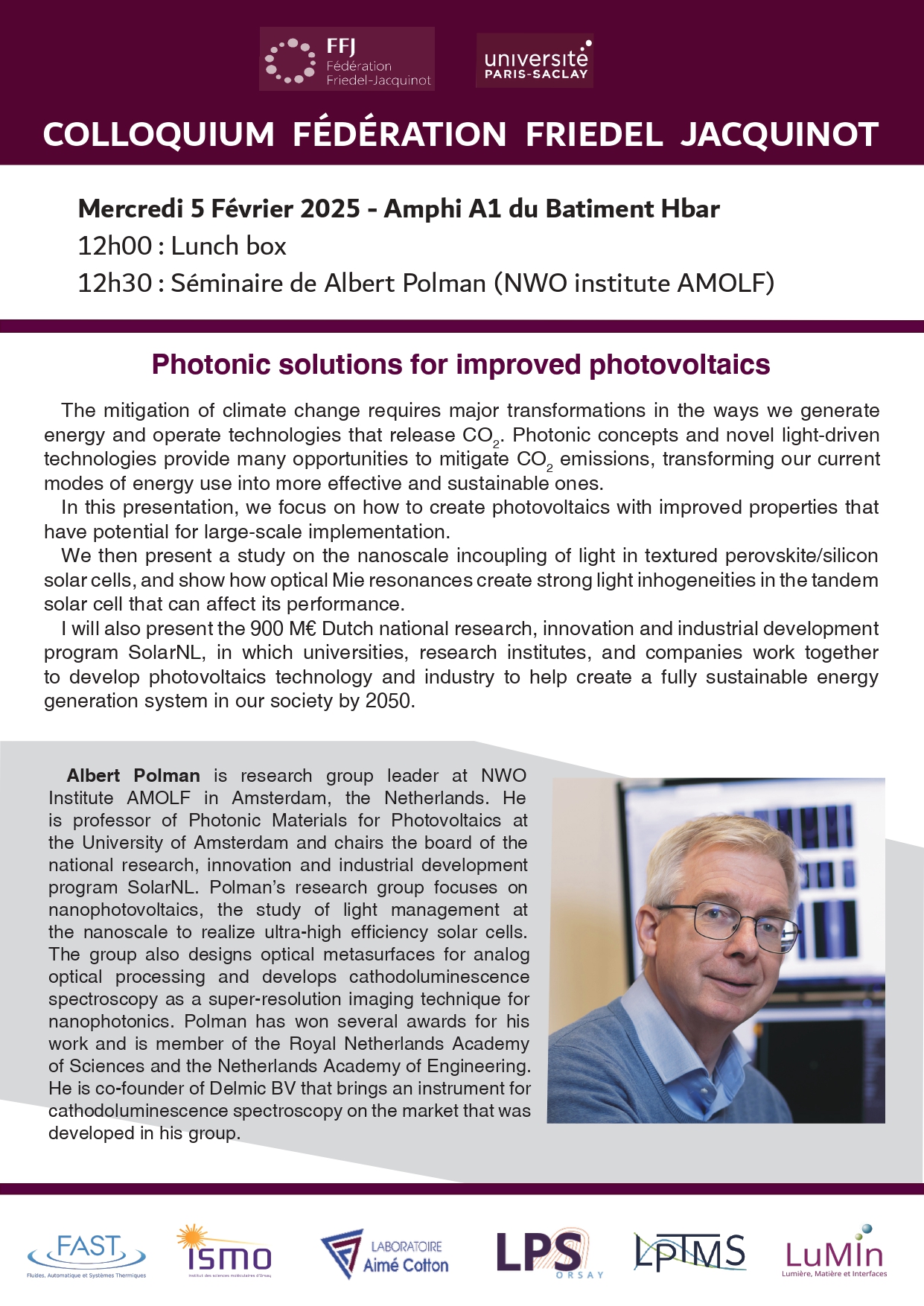
Photonic solutions for improved photovoltaics
M. Albert Polman
Ce séminaire s’adresse à la fois aux étudiants et aux chercheurs.
Le moment de convivialité est un moment privilégié pour engager des discussions entre étudiants et chercheurs.
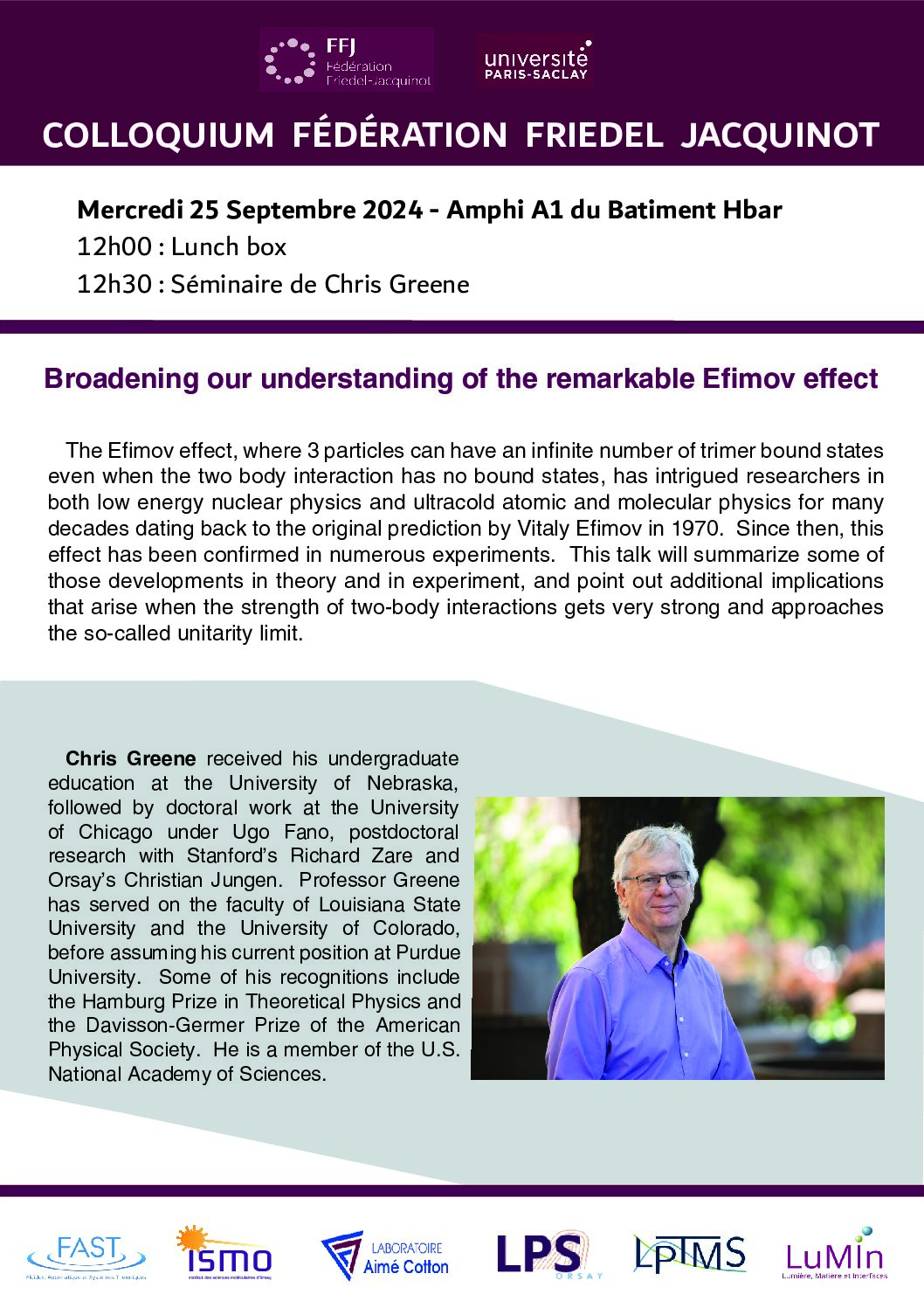
Broadening our understanding of the remarkable Efimov effect
M. Chris Greene
Ce séminaire s’adresse à la fois aux étudiants et aux chercheurs.
Le moment de convivialité est un moment privilégié pour engager des discussions entre étudiants et chercheurs.
14h – 16h Amphithéatre Dorothy Hodgkin (Bâtiment Ouest, ENS Paris Saclay, 4 Avenue des Sciences, 91190 GIF-SUR-YVETTE)
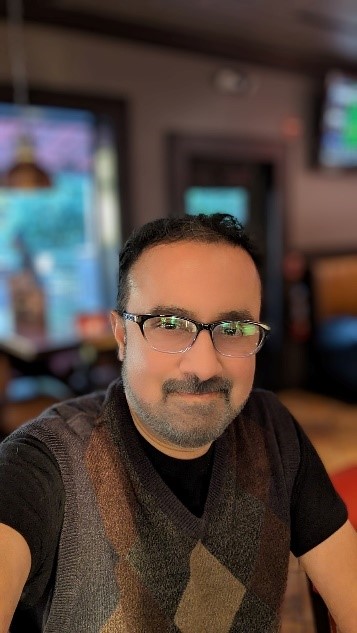
Spin-heat coupling is important from a fundamental perspective as well as for many thermoelectric and thermomagnetic applications. Can we generate local heat with magnetic nanoparticles or ‘super spins’? What about manipulation of spin transport using thermal gradients? In this talk, I will provide some insights into these questions based on our research in a number of systems ranging from nanostructures to heterostructures including anisotropic nanoparticles, compensated ferrimagnets, topological systems, spin gapless semiconductors, interfaces of 2D materials like graphene, TMD on ferrites and garnets. The common theme is our ability to sensitively measure and tune the effective interfacial magnetic anisotropy in a large class of magnetic materials including bulk, nanoparticle assemblies and thin film heterostructures. I will describe how we combine conventional and relatively unconventional experimental techniques like magnetometry, RF transverse susceptibility, magnetocaloric effect, anomalous Nernst effect (ANE), spin Seebeck effect (SSE), FMR spin pumping (FMR-SP) to probe the fundamental physics of spin dynamics, spin-heat coupling, thermal spin transport across interfaces. Some recent results on our ongoing projects including core-shell and anisotropic nanoparticles, influence of magnetic anisotropy on spin Seebeck effect (SSE) and anomalous Nernst effect (ANE), universal scaling of SSE in compensated ferrimagnets, estimation of magnon propagation length will be discussed.
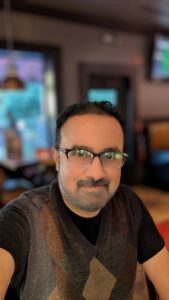
– Hari Srikanth is a Distinguished University Professor at the University of South Florida. He received his Ph.D. in experimental condensed matter physics from the Indian Institute of Science, Bangalore and has been at USF since 2000. He currently is the Director for Florida Initiative for Emergent Low-Dimensional Quantum Materials (FIELD-QM). His research spans a wide range of topics in magnetism and magnetic materials. He has over 300 publications and has given over 200 invited talks around the world. In 2019, he was an IEEE Magnetics Society Distinguished Lecturer. Hari is a Fellow of the American Physical Society, Fellow of the Institute of Physics and a Senior Member of IEEE. He currently serves as an Associate Editor for Physical Review B. Hari has been closely involved with the MMM and INTERMAG conferences for over 20 years serving as Publication Editor, Publication Chair and on program committees. He is a recipient of an Alexander von Humboldt Research Award and is affiliated with University of Duisburg-Essen during his AvH visits to Europe. Hari also received a Fulbright Scholar Award to be a visiting professor at Nanyang Technological University in Singapore and is a visiting professor at IIT Bombay. Hari is a theme co-organizer for ICM 2024 in Italy.
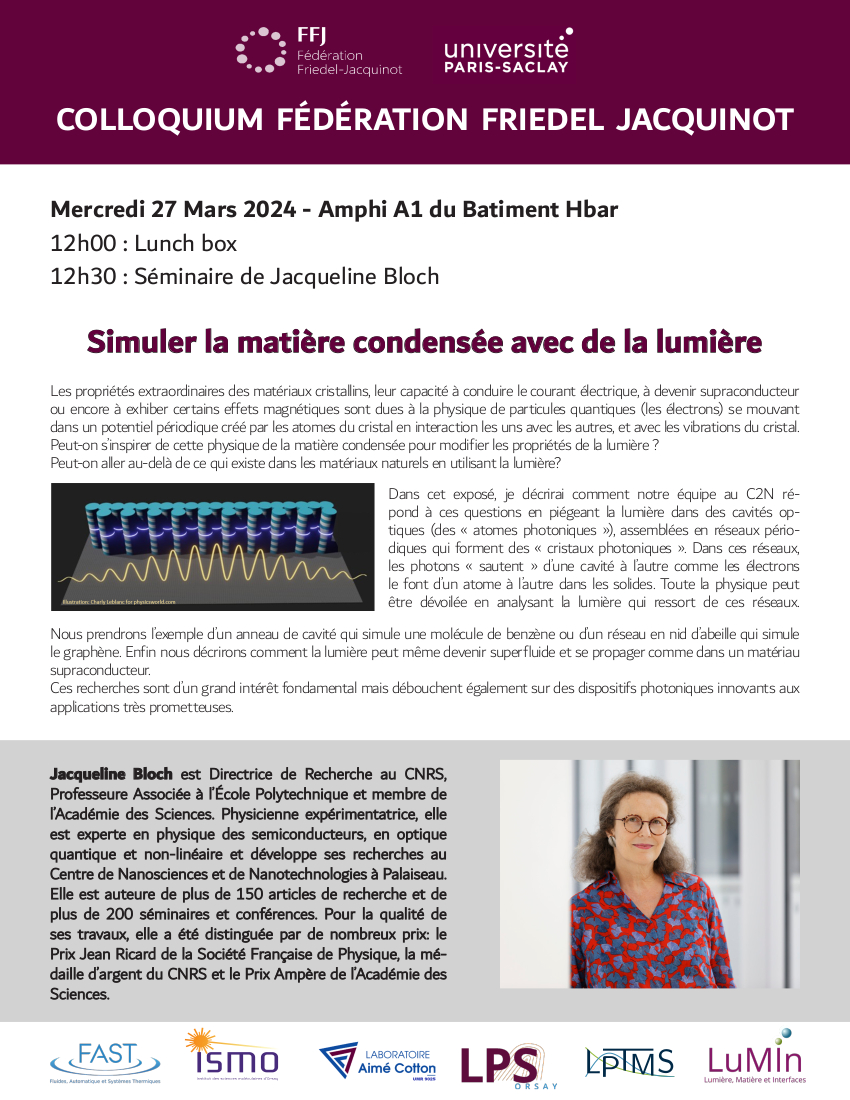
Simuler la matière condensée avec de la lumière
Mme Jacqueline BLOCH
Ce séminaire s’adresse à la fois aux étudiants et aux chercheurs.
Le moment de convivialité est un moment privilégié pour engager des discussions entre étudiants et chercheurs.